The latest Eye of the Gale Spotlight is on Leigh Spring, the athletic trainer for Lancaster High School. She is a trained professional and has been in this field for over fifteen years. She has many credentials including a Master of Science, Orthopedic Physician Extender – Certified, and Registered Orthopedic Technologist (FMC health). Due to the amount of sports that LHS offers students, it is important to make sure all of the students are being treated for injuries. According to PubMed, research has shown that about two million injuries, 500,000 doctor visits, and 30,000 hospitalizations occur each year among high school athletes. However, only 66% of United States schools employ certified athletic trainers, which means that approximately 5.9 million high school student-athletes may not have immediate access to an athletic trainer (National Institutes of Health).

“Athletic trainers improve functional outcomes and specialize in patient education to prevent injury and re-injury. Preventative care provided by an athletic trainer has a positive return on investment for employers. AT’s are able to reduce injury and shorten rehabilitation time for their patients, which translates to lower absenteeism from work or school and reduced health care costs” (National Athletic Trainer’s Association).
Spring has grown up around sports and participated in them for a great deal of her life. She has also always enjoyed helping people.
“I found a job where I could still be around sports and help people. I knew it was something I wanted to pursue,” said Spring.

Lancaster High School Athletic Director Pam Bosser believes it is important to have an athletic trainer available because it places a healthcare professional at the point where injuries happen.
“Athletic trainers provide expert, timely care that improves safety, shortens recovery and supports long-term health and performance,” said Bosser.
Athletic trainers help before, during, and after the injury process.
“Athletic trainers can sometimes catch problems before they become injuries,” said Spring.
When the actual injury occurs trainers are the first to react. They have to make split second decisions on the care and treatment due to not knowing the seriousness of said injury. A part of that decision is deciding who to tend to first. Trainers juggle multiple injuries at once they have to use critical thinking to handle the situation in the best possible manner.
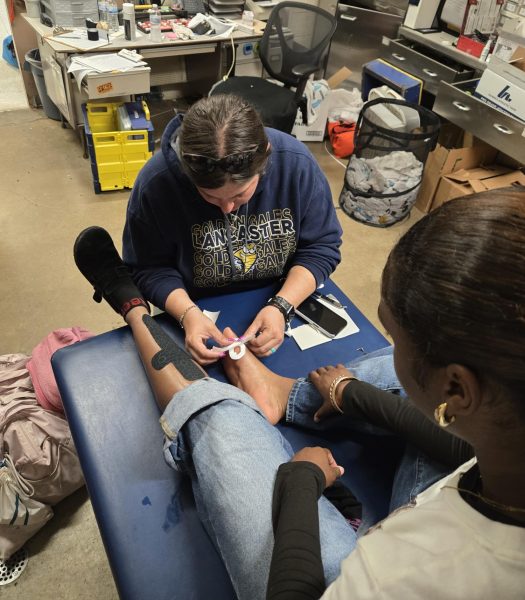
“When dealing with multiple injuries at once I have to triage the situation, meaning I pick the injury that appears to be the worst at the moment and evaluate and deal with that one first. For example, two players collide on a soccer field, one is lying on the ground and the other is walking around. I would attend to the athlete lying on the ground first,” said Spring.
Spring said that she has seen a multitude of injuries during her fifteen years of being an athletic trainer. She said the most common ones are ankle sprains, ACL injuries, and shin splints, however some of the worst ones have been some elbow dislocations and an open fracture of the lower leg. Spring is the first on the field to assist the athlete.
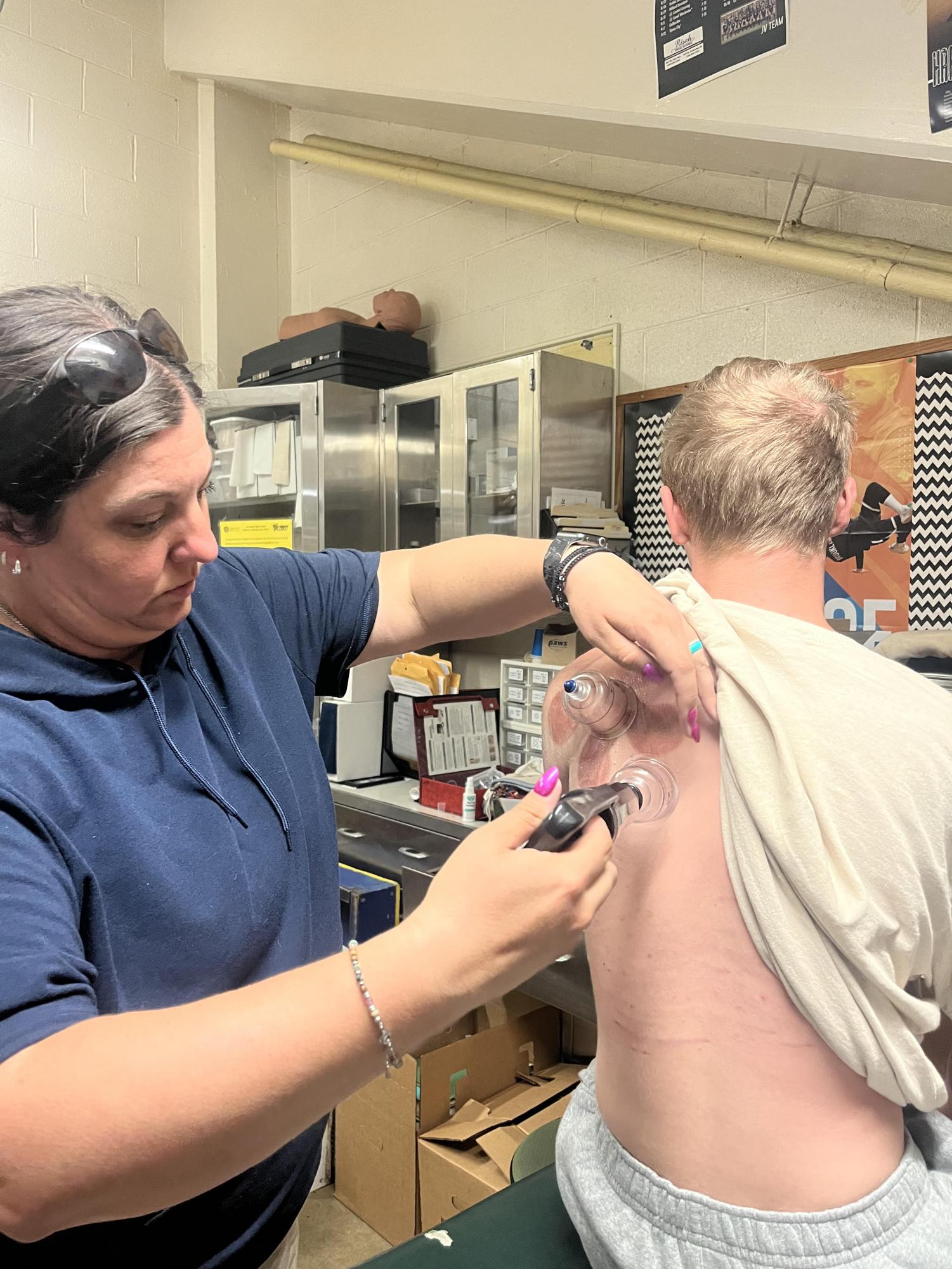
“Athletic trainers are first the responders, making immediate decisions on the care and treatment of the injury whether it be an emergency situation or not. Once the injury diagnosis has been determined, athletic trainers work to return the athlete safely back to competition through rehabilitation and other treatments,” said Spring.
Trainers also have to deal with delivering difficult and sometimes unwanted news.
“There have been multiple situations in my career where I’ve had to deliver difficult to an athlete and/or their parents and they are always emotionally challenging conversations on both sides,” said Spring.